









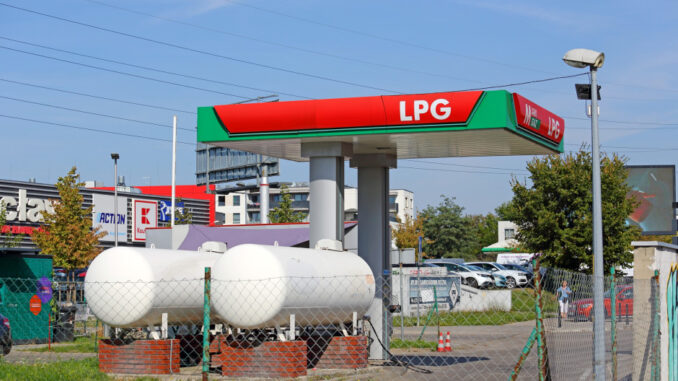
Recent geopolitical tensions, particularly the conflict involving Israel, the USA, and Iran, have led to a surge in fuel prices worldwide. In response, the Polish government rapidly enacted tax changes to alleviate the burden on drivers; however, these changes did not extend to LPG users. This exclusion has sparked significant controversy among industry representatives and consumers.
LPG, the third-most important transport fuel in Poland after gasoline and diesel, accounts for 8.4% of the market share. Poland boasts the largest autogas market in the European Union, with 13.4% of all passenger cars powered by LPG. As of 2025, there were 3.2 million registered LPG vehicles in Poland, with 2.47 million actively in use.
Despite its prevalence, the Ministry of Finance has not addressed calls from the Polish Organization of Liquid Gas, the Polish Chamber of Liquid Gas, and the Coalition for Autogas to include LPG in the new tax reductions. Bartosz Kwiatkowski, General Director of the Polish Organization of Liquid Gas, highlights that the exclusion affects around three million drivers across the country.
LPG is often referred to as a „social fuel,” primarily used by individuals with incomes below the national average. According to EKObarometer, the largest group of autogas users is those earning less than 4,000 PLN per month. Kwiatkowski argues that these individuals, including residents of smaller towns and people earning less, are unfairly bearing the brunt of the crisis precipitated by the conflict in the Persian Gulf.
Tadeusz Ożarowski, Chairman of the Coalition for Autogas – Employers’ Union, echoes these sentiments, stating that excluding autogas from the tax reduction package is a decision lacking rationality from both economic and social policy perspectives. He emphasizes that revisiting past solutions, such as those during previous energy crises where VAT on autogas was reduced, is crucial. Without this support, the regulatory stability and market confidence could be at risk, contrary to the principles of crisis management practiced historically.
The response from the LPG sector underscores a pressing need for policy revision. It argues that the current decision might erode the sense of regulatory stability among market participants and contradicts established practices of supporting consumers in crisis situations.








This is the right website for anyone who wishes to find out about this
topic. You realize a whole lot its almost hard to argue with
you (not that I personally would want to…HaHa). You certainly put a new spin on a topic which has been written about for a long time.
Great stuff, just wonderful!